For decades, the automotive industry has played a game of “more is more.” Horsepower, technology, and cornering grip have become the currency of an ongoing arms race, with Nürburgring lap times serving as the ever-moving benchmark. Performance expectations continue to climb, even as much of that capability becomes increasingly difficult to experience on public roads.
In the pursuit of being top dog, manufacturers have also become increasingly focused on what’s next. Older models often fall by the wayside, leaving former ‘Ring contenders with dwindling parts support, discontinued components, or generic replacements that fail to account for what made them special in the first place.
But somewhere along the way, enthusiasts began rediscovering an age-old truth: It’s more fun to drive a slow car fast than a fast car slow. Suddenly, the cars once overshadowed by the latest and greatest are getting a second look. Older Porsches, among countless other enthusiast favorites, are finding their way back onto the road, track, and into the hands of owners who appreciate the experience more than the numbers. And with that renewed interest comes a growing demand for parts that keep them performing as they were intended—or better.
While an OEM parts counter may leave owners searching for alternatives, aftermarket companies like AST x MOTON Suspension have long understood that a car’s age, rarity, or discontinued status shouldn’t determine whether it deserves proper performance support. For shops helping customers bring these cars back to life, suspension is one of the most meaningful upgrades they can make. A properly engineered coilover system can transform how an older car drives, delivering modern performance and confidence without compromising the character that made it worth keeping. That’s exactly where AST’s 1-way coilovers come in.


ENGINEERED WITH INTENTION
For the uninitiated, AST Suspension, along with its sister company MOTON, is a Netherlands-based suspension company that has been engineering solutions for enthusiasts and racers around the world, including static and adjustable lowering springs, air jacks, front-axle lift kits, and, you guessed it, coilovers. It’s a markedly smaller operation than many of its big-name competitors, but its size is part of its strength.
AST is a nimble operation that feels human because its products are hand-assembled and validated by people who genuinely care about what they’re making. You could call them passionate, but that cliché undersells their engineering expertise and near obsession with suspension in all its forms. The team enjoys learning the intricacies of different suspension systems and finding ways to push them to perfection.
That hands-on approach also extends beyond the catalog. When a vehicle or application requires a specific damping characteristic, AST can custom-build components around those needs. Whether the customer is working with an unusual platform, developing a dedicated track car, or seeking a particular balance between ride quality and control, AST’s engineers can create a solution tailored to the application rather than forcing it into an off-the-shelf compromise.
AST’s specialized manufacturing and assembly are supported in the US by Turn 14 Distribution, the brand’s exclusive US distributor. Sales support throughout the order process and product support after the purchase are advantages of this partnership. When the time comes to service a coilover kit, around 60,000 street miles or 10,000 track miles, three dedicated service centers exist across the US for convenient rebuilds.
Whether a kit is pulled from the catalog or custom-built by AST’s engineers, every product receives a unique reference number tied to its specific build. That makes it easier to source the correct replacement parts during service, especially if the vehicle or coilover kit changes hands.
FROM THE TRACK TO THE STREET
The brands’ credentials extend beyond the lab and onto the tarmac.
AST’s dedicated motorsport line, MOTON, has been trusted across the racing world, including by many 996 GT3 R and GT3 RS teams in the early 2000s. Those teams competed—and won—in events such as the 24 Hours of Le Mans, the FIA GT Championship, ALMS, and the IMSA and Grand-Am series. MOTON remains a trusted name in motorsport today.
That success allowed many of MOTON’s motorsport lessons to make their way into AST’s road-going lineup. Each AST system is valved to strike a balance between compliance and performance, giving drivers usable road manners at softer settings and the control needed for spirited canyon runs or occasional track days at the firmer end of the adjustment range.
If a customer is stuck between AST or MOTON, the distinction is fairly clear. For a car that spends most of its time on the street with the occasional track day, AST is the better fit. If the car is a dedicated track machine or competes regularly, MOTON offers the additional control and consistency those applications demand.
The technical difference between AST and MOTON largely comes down to damper design. MOTON dampers use a harder, flat-piston design that reduces ramp-up and ramp-down in the compression damping. This makes the dampers more consistent and predictable under demanding conditions, though that added control can come at the expense of ride quality on the street.
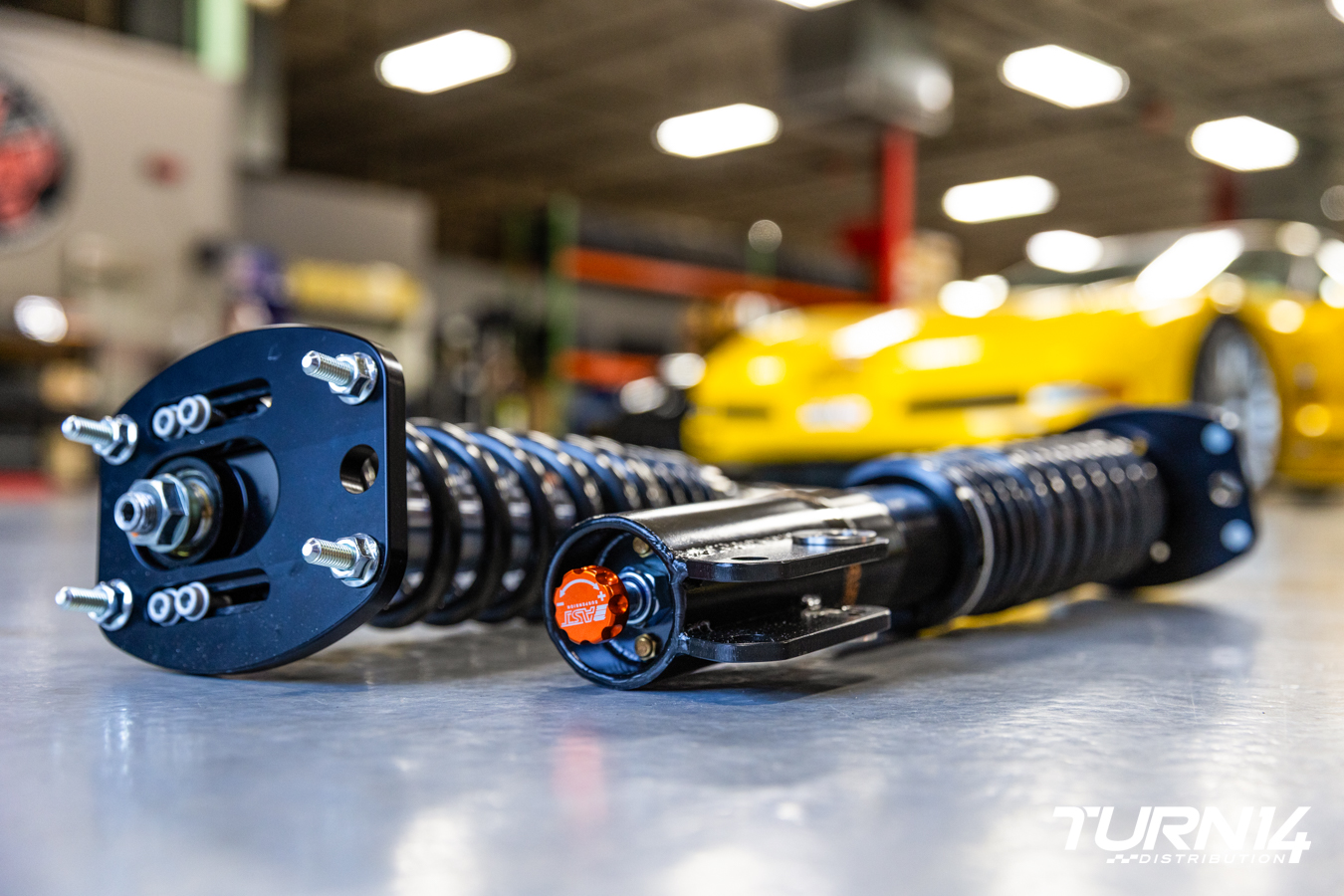
AST also offers additional billet aluminum top hats that provide another level of adjustability to the 1-Way coilover set. For this particular kit, use part number ACT-P2013S.
ONE, TWO, THREE
AST’s coilover systems have recently gone through a naming update. Longtime dealers may know these products as the 5100-, 5200-, and 5300-series coilovers. Today, they are referred to simply as 1-way, 2-way, and 3-way systems. The new naming convention is intended to make the lineup easier to understand by directly identifying the number and type of available adjustments.
For shops, that also makes it easier to answer a common customer question: What is the best kit for my car?
The range breaks down as follows:
- 1-way: A coilover system focused primarily on street driving, with a single adjustment knob that controls rebound. AST determines compression to match the supplied springs. A 1-way Competition version is also available.
- 2-way: A dual-purpose, remote-reservoir system with separate adjustments for rebound and compression.
- 3-way: A motorsport-focused, remote-reservoir system with separate adjustments for rebound, low-speed compression, and high-speed compression.
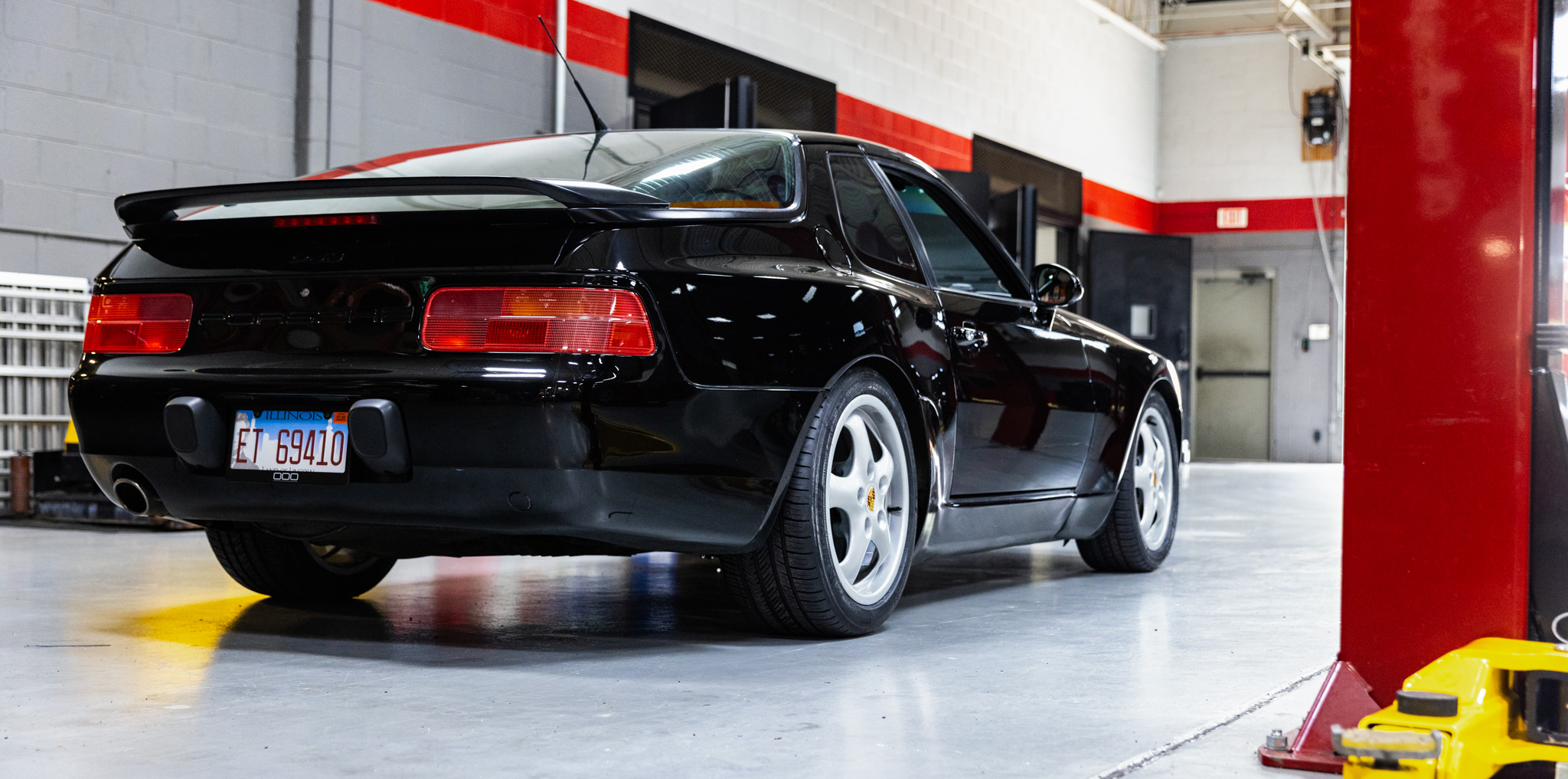
The system featured here is the AST 1-way Competition kit. It sits between the standard 1-way and 2-way systems, adding AST’s billet-aluminum top hats and adjustable camber plates. Some customers choose the Competition kit for the additional, more precise alignment control. In some cases, like this aging 968, reusing the original top mounts or even finding OE replacements isn’t an option.


MADE FOR THE UNCOMMON
One of the prevailing strengths of AST x MOTON is its willingness to support platforms that don’t exactly dominate fitment charts. As an older, less common transaxle Porsche, sourcing a properly engineered suspension solution for applications like this 968 can be more complicated—and sometimes more costly—than ordering parts for a current 911. That made it an ideal vehicle to demonstrate how AST develops damping solutions for more than just the usual performance platforms.


To see how the process works, we visited Pennsylvania’s AST x MOTON service center, R/T Tuning in Montgomeryville, PA, to get a firsthand look at the installation of the AST 1-way Competition coilovers.
The first impression is that these new components looked the business, with a fit and finish consistent with a coilover system of this caliber. The threaded damper bodies feature a KTL anti-corrosion treatment to ensure they’re ready to survive daily driver duties on salty roads to hot laps on scorching tarmac.
Installing the front suspension on the 968 was a straightforward one-for-one swap, while the rear required considerably more work. Unlike other Porsches of this era, the 968 requires the side skirts to be removed to access the torsion bar. While not every AST installation will involve removing manufacturer-specific suspension components, the 968 demonstrates the attention required and the company’s dedication to developing complete suspension solutions for less-common platforms.
The installation also provided an opportunity to compare the weight of the original equipment with the new AST components. Compared with the OE hardware, the AST components reduced unsprung weight by 11.4 pounds overall—3.2 pounds at the front and 8.2 pounds at the rear. That may not sound like much on paper, but shedding this weight can help the suspension respond more quickly and demonstrates AST’s ability to develop solutions for the specific needs of less common platforms like the 968.


ON THE ROAD
Over the years, aftermarket coilovers have developed a reputation for prioritizing aggressive, “race car” handling at the expense of ride quality. Thanks to the proliferation of budget kits, some enthusiasts have come to view that harshness as part of the sporting-character recipe. That reputation can make suspension recommendations a harder sell to the customer at the service counter.
The AST 1-way system is here to squash that stigma. This kit shows that a well-engineered suspension system means comfort doesn’t have to come at the expense of performance. In the case of this 968, the AST 1-way coilovers made the car feel more confident on twisty roads while still providing supple support for the enthusiast behind the wheel. The front end felt more direct without becoming pointy, while the rear end’s strange lateral movement through corner exit disappeared.
Rather than transform the car into something it wasn’t, the AST system helped reveal the personality that had been masked by worn and outdated OE equipment. The 968 felt more like the neutrally balanced sports car it was celebrated as in the early 1990s—and more like the worthy final chapter of a transaxle Porsche story that began with the 924 in 1976.

MORE ISN’T ALWAYS MORE
The automotive performance arms race will keep moving. There will always be more horsepower, more technology, and another new platform moving the goalposts, but that doesn’t mean older cars have run out of road. In fact, there’s a reason enthusiasts keep bringing them back: a car doesn’t need to be the fastest thing on four wheels to be fun. It just needs to feel alive.
That’s where AST’s 1-way system makes its case, giving older, less common platforms the suspension support they need without burying the driver in adjustments or forcing a street car to pretend it’s a race car. On the 968, the result was a more composed, confident, and enjoyable driving experience that brought the car’s original character back into focus.
For dealers, the transition from the 5100 name to 1-way makes that solution easier to communicate and easier for customers to find. And for those looking to take performance further, AST and MOTON’s 2-way and 3-way coilovers offer additional adjustability, with build times typically ranging from four to six weeks.
Because sometimes the best upgrade isn’t about chasing the next benchmark. It’s about making the car you already love even better.